A lot of people are still struggling to get things off the ground after the last few years of chaos...
Almost 3 years ago, when it all started, I received over 131 emails talking about the need to "pivot" in order to survive.
Since that time, I've received over 500 more emails urging the need to "pivot".
Let's face it...
There are thousands of small businesses still gasping for air right now.
But, what's missing in most of these emails is a clear explanation of what it means to pivot, when to pivot, and how to pivot.
For starters, where'd that word even come from?...
According to Fast Company, Eric Ries is responsible for making the word "pivot" popular.
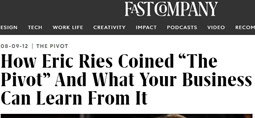
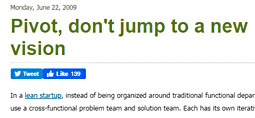
In 2009, Ries wrote this blog post:
And in 2011, he published
The Lean Startup.
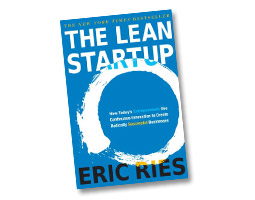
Chapter 8 was titled:
"Pivot (or Persevere)".
He made an analogy between basketball and business...
In basketball, you pivot by keeping one foot in place while using your other foot to get a better position.
Here's what Ries said back in 2009:
"I want to introduce the concept of the pivot, the idea that successful startups change directions but stay grounded in what they've learned. They keep one foot in the past and place one foot in a new possible future."
He created this short definition:
"A pivot is a change in strategy without a change in vision."
Here's another example that makes it even easier to understand.
Imagine you want to use GPS to get somewhere...
Step 1: You start a GPS app and pick a destination. (This is your vision.)

Step 2: While driving, you end up in heavy traffic and your progress slows to a crawl.
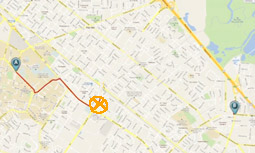
Step 3: After thinking about the situation, you decide to find a new way to get to the same destination. (This is your pivot.)
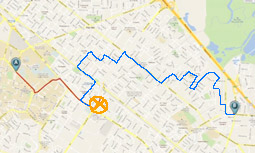
The "how to" has changed.
The "where to" is the same.
It's as simple as that...
And these pivots happen every year, not just during hard times.
Even during a booming economy, some companies are forced to pivot in order to survive...
For example, YouTube® started out as an online dating service.
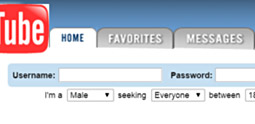
The idea was to have singles upload videos. That idea failed. But, the video uploading feature was a hit, so they just focused on that feature.
Ries calls this a "Zoom-In" pivot, when a feature becomes the entire product. (By the way, there are over 10 ways to pivot. More on that later...)
Another example is Flickr®. Believe it or not, it started as a game.
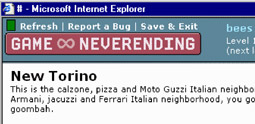
That first idea failed. But, the ability to upload photos was popular so they focused on that, and it evolved into the Flickr we know today.
Those are just two examples.
Tip: Search Wikipedia for company names and read the History section to see more pivot examples...
For example, the original sketch by Jack Dorsey for an "SMS messaging service" is part of Twitter > History.
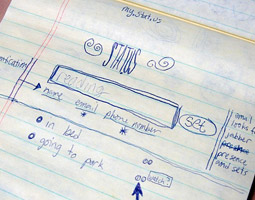
I think one reason we don't hear more inspiring pivot stories is because, generally speaking, our culture still thinks "failure is bad".
Another reason is that companies tend to edit their "Origin Story" to build their brand.
Anyhow...
Now that the "pivot" idea is crystal clear, let's tackle the next question...
"How do I know if I should keep going or pivot?"
"Should I stick with this, or do something else?"
"How do I make the right choice?
Well, you already know what "hustlers" think...
|
"Work harder, longer, faster, and never, ever, ever give up." |
|
"I've got a dream that's worth more than my sleep." |
|
"Good things come to those who hustle." |
That may be good advice in some cases...
But how would you know?
You might just be...
|
"revving your engine harder only to spray mud on everyone around you and burying you and your business deeper in the mire." |

|
"A foolish consistency is the hobgoblin of little minds." |
|
"The hardest part of entrepreneurship is to develop the judgment to know when it's time to change direction and when it's time to stay the course." |
So, how do you make the right choice?
Tim Ferris asked that question to Scott Belsky, CEO of Behance.
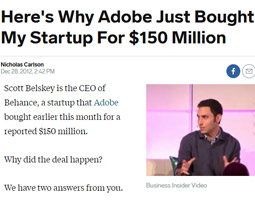
Here's what Scott Belsky advised:
"It has to do with the truth of our initial assumption. Do you still think that your initial assumption was correct? And knowing all you know at this point, would you pursue this project all over again?"
Initial assumption...
What?
Ok, let's use "The Five Parts of Every Business" from The Personal MBA to help make this really clear.
|
"A business is a repeatable process that: |
Those five parts are in every successful business...
And if any part is missing, the business eventually fails.
So... before a business starts, assumptions are made for each part.
For example...

John Smith just discovered a revolutionary way to make glow in the dark frisbees...
He plans to start a new business.
Here's why he thinks it will work:
|
1. I can make glow in the-dark frisbees. |
And Throw-N-Glow Inc. is born...
For each of the 5 parts, John believes something is true.
These are his Critical Assumptions...
"Critical", because if any one of them turns out to be false, the entire chain breaks.
"Assumptions", because it's what he thinks will happen, but hasn't proved.
1 year later...
John discovers that most kids are buying AirGlider frisbees for $4, because they don't think the Throw-N-Glow is really worth $9.
That's a critical problem...
And the truth is:
|
"Every business or offering has a set of Critical Assumptions that will make or break its continued existence. The more accurately you can identify these assumptions in advance, and actually test whether they're true, the less risk you'll be taking and the more confidence you'll have in the wisdom of your decisions." |
Ok, back to Scott Belsky's advice...
At any point, when you look at your critical assumptions for these five parts, if you believe one or more of them is no longer true (or will no longer be true), it's time to pivot.
That's the key.
And that also reveals the cause for so much confusion right now...
"...when you look at your critical assumptions..."
If you're like most small business owners, cough cough, you either didn't write down your critical assumptions, or they're buried in some folder collecting dust.
Without a detailed list of critical assumptions, which you review regularly, it's difficult to know if you should keep at it, or pivot.
The list is like a blueprint...
|
"If you're building a new house, the more exact and clear the definition you have at the start, the less costly it will be to complete construction." |
Now, as the Chinese proverb says, "The best time to plant a tree was 20 years ago. The second best time is now."
I made a simple, 1-page worksheet for you. It's called "Stick With It or Pivot?".
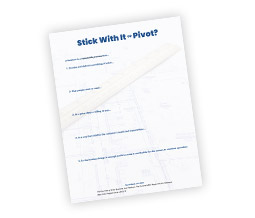
Print it, but only fill out #5 for now.
There's an important reason for that, which I'll explain soon...
You'll understand why you worked backwards, once it's all filled out.
For #5, think about this...
1. You value your time, energy, knowledge, and resources.
2. Money is the most common way to store value.
3. How much will your business need to make, for it to be worthwhile?
Don't rush.
Really think through 1, 2, and 3...
When you're ready, write down that amount as a factual statement, under #5 on the worksheet.
For example...
"My business will create $85,000 of profit each year."
It needs to be specific so you can tell if it's True/False in a split second.
Got it?...
Now, at this point, you've decided on one small part of "worthwhile".
But not the most critical part.
On Tuesday, I'll show you another factor that some believe is "unrealistic" to consider.
But I think they're incorrect.
In fact, it may be the most important part of the formula to get right, if you want to keep going.
More on that tomorrow...
But here's a "sneak peek":
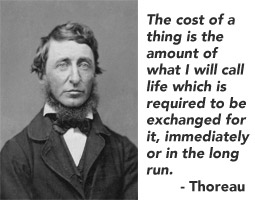
All the best,
Jack Duncan
MarketBold.com
